
Generics
Their black-and-white packaging is gone but their appeal persists

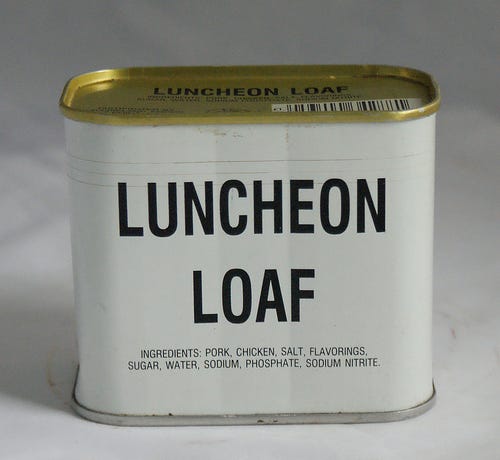
Lots of people are likening our current oil price spikes and troubles at the cash register to the 1973 Middle East oil embargo when gas pump prices and inventory got so bad there was rationing, federal price controls and, even a screwy system of “odd” and “even” days when only half the car owners could buy gas one day and the other half had to wait a day.
There also was a new market gambit that emerged out of that earlier American consumer crunch that most people have all but forgotten. But maybe you are one of those who remember the advent of ‘generics’ — all those plain black-and-white boxes of macaroni, beer, detergent, breakfast cereal and cigarettes. Do you have a ‘generics’ memory or story?
In the late 1970s, the American economy suffered from a double whammy of soaring inflation rates and high unemployment and flattened pay levels. This became known as “stagflation,” a macroeconomic condition that defied all previous predictions and studies by the world’s greatest economists. All the old tricks to tighten money supplies, goose consumer buying and set price controls didn’t work. In fact, the more the federal government tinkered with the slothy economy, the worse it got. Toward the end of the decade, home mortgage rates peaked at 18 percent.
In the midst of this terrible economy, grocery stores and their manufacturers and suppliers came up with their own novel (desperate?) idea. They began to offer “off-brand” and “off-price” private brands to compete with all the top brand foods and goods that American consumers were used to seeing on TV in all those catchy ads with flashy labels, celebrity pitchmen and sing-along jingles.
Shelves full — and then whole rows — of plain black-and-white packages started showing up in grocery stores all across America. At first these “generic” products were slightly inferior to their colorfully labeled major market brands. But their lower prices caught on very quickly with consumers and the manufacturers paid attention and started adding better ingredients.
Middle Class American households that had to wait over an hour to fill up their automobile tanks at the gas station soon made the “generics” off-label market a retail success. Shoppers were told the lack of advertising, fancy label designs and not hiring expensive Hollywood celebrity pitchmen was how the contents inside the black-and-white boxes could cost so much less. As “generics” started to become a “cool” shopping habit, the grocery stores and manufacturers began to support their off-brand products with some modest advertising campaigns.
Buying, eating, drinking, smoking and smelling like a generic became something of a reverse status symbol. For some people buying generics became an act of rebellion against all the consumerism and marketing ploys. Devout “brand loyalty” became one of the victims of the 1970s stagflation and the OPEC oil embargo. Economies can be very funny, until they start to hurt, if you know what I mean.
Generic aftermath
Ralph’s Markets in California launched a number of its own lines of generic and store-named alternatives to the pricier national brand names. In Pasadena, Joe Coulombe started to franchise and expand his specialty markets that only carried his own brands, and none of the major brands. His Trader Joe’s stores now total 631 locations from coast to coast.
On the East Coast, the store brands of the A&P Markets (Great Atlantic & Pacific Tea Company) found new consumer interest for its private Eight O’Clock coffee, its Grandmother’s baked goods and its Quaker Maid canned and frozen goods.
Generics was something of a “match made in Heaven” between shoppers forced to pinch pennies and retailers looking for ways to cut their own overhead. It is quite easy to trace these market dynamics to the beginnings of such “cost-conscious” behemoths as WalMart and Costco.
Before the advent of generic-labeled products and the rise of many stores’ private brands, all market prices for everything from breakfast cereal to high-end condiments were set by the national manufacturers like General Mills, Nabisco, Coca Cola, Proctor & Gamble and others.
Now WalMart and Costco dictate the full specs of what they put their own “Great Value” and “Kirkland Signature” labels on. And they set both the wholesale and the retail price. Target, the chain of mega-department stores based in Minneapolis, Minnesota, has 59 separate private (generic) brands in its stores. The fastest growing grocery store chain in the United State right now is Germany’s Aldi, where the shelves are dominated by its private-brand groceries. (By Aldi corporate policy, only two major brands per item are allowed on store shelves next to Aldi’s home brands.)
Generic vegetables at any price
During the 1970s oil crisis and rise of the black-and-white boxed generics, my mother was a canned vegetable sales broker. The company she worked for in Maryland sold canned corn, green beans and peas by the train carload. During the summer harvests, the company’s warehouses would get filled with stacks of pallets of tin cans of vegetables. When Jolly Green Giant or some other major food corporation would buy a big order of green beans, the cans would be loaded on a conveyer belt and labeled with the Green Giant or other private logo. When a grocery store chain like Safeway would order some green beans for its own label, the same canned vegetables would get a different label.
One time a big load of brand name vegetables was set for delivery, when a very big order was sold to the U.S. military. My mother’s company then took the private labels off the cans and replaced them with a generic U.S. Government label. Turns out, that all vegetables are “generic” on the inside, no matter what the label says on the outside. The same is true for dozens and dozens of other foods and products as we learned back in the days of stagnation.
Generic Drugs
Just to be clear, the whole topic of generic drugs is a separate story from grocery store generics. In the pharmaceutical industry, a generic drug is a medicine, pill or procedure that has an expired patent. Under the Federal Drug Administration (FDA), the government regulatory agency awards patents for newly invented drugs, following rigorous testing and trials.
The patents can last between three and 20 years depending on many factors. The exclusive patents are meant to allow a drug manufacturer enough time in the market to recoup its costs of study, research and development that can sometimes reach into the billions.
When a patent expires, other pharmaceutical companies can enter the market with their own “generic” drug that must replicate or closely align with the contents and efficacy of the original patent drug.
To all consumers maltreatment, major pharmaceutical companies (“Big Pharma”) resort to all sorts of market tricks and runarounds to extend the life of their patents or otherwise manipulate the retail prices of their drugs. This is why many of the so-called generic, or off-label drugs are never really much of a bargain or savings. The generic drug topic is a complicated story about corporate greed and monopolization best saved for another day or separate Substack posting.
The future of generics?
It’s only the Baby Boomers who might have memories, fondly or otherwise, of the 1970s black-and-white boxed generics. But all the following generations, including the Millenials, Gen Xers, and now Gen Z, have made WalMart, Costco and other private labels major factors of the overall consumer market.
But do all the younger generations that grew up with fully developed pangs of instant gratification over FOMO styles, fashion trends and über brand loyalty really care about shopping for value and cost savings that generics represent?
These answers can be found by looking at who shops at WalMart, Costco, Target and similar retail chains. In a pre-COVID pandemic retail industry survey, it was found that one-third of all shoppers bought private store brands over more glitzy major labels. A more recent survey, taken in the midst of rising inflation and increased cost-of-living, found that more than half (55%) of American shoppers switched from the major labels to store brands.
These surveys, conducted by the Nielsen pollsters, found more and more younger Gen Z and millennials shopping at WalMart and also buying from online bargain sites and merchandizers.
So the answer to, “Where did all the Generics go?” is an obvious: “Nowhere.” They are still here and occupying a major portion of all consumer markets.
Meanwhile, here in California we’re all pumping gallons of $6.19 gas into our cars. For a touch of nostalgia, we’ll mention that in 1973, the OPEC oil embargo shocked the global markets when the cost of crude oil increased from $3 a barrel to $12 a barrel in just one month. Today those same barrels of oil are priced at $100, generic or otherwise.
— Rollie Atkinson
6-10-2026