Here in northern California, all the plants, birds and other critters, including us humans, are in consensus that Spring got here very, very early this year. Actually, it’s only the humans that are being startled by Spring’s early arrival because they are the only ones with clocks and calendars. All the other living things are just following their natural rhythms.
Do you live here in Sonoma County or close by? How many clues have you noticed for this record early Spring we’re having here among the vineyards and redwoods next to the Pacific Coast? Are our calculations being influenced by us watching all the frigid blizzards and waves of cold snaps over the Midwest and eastern parts of our continent? Is this all about Climate Change or are we just letting our clocks and calendars get the best of us?
The Vernal Equinox
No matter, at least the planets will get it right. Just like every year, the Vernal Equinox will take place within a nanosecond of its expected arrival based on ancient astronomical calculations — never early, never late. The equinox is when the Sun reaches the Equator and the hours of darkness and light become equal during the 24-hour day we count with our clocks. This year it will happen on March 20 at 7:46 a.m. (PDT.) According to human civilization this is the official moment of a new Spring. According to all other living things, it really doesn’t matter all that much.
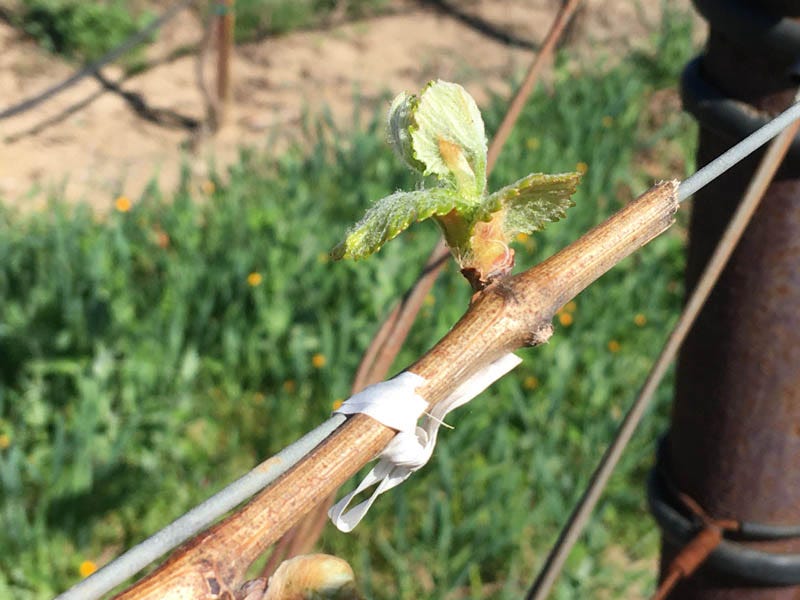
Watching the grapevines in the vineyards where I live near Healdsburg in Sonoma County, the new growing season burst out almost before February ended. “Bud break,” when the first swollen ends of the vines open into green shoots, typically happens here in mid-March. As a local newspaper reporter, I’ve been chronicling the first bud breaks for more than 40 years and this is the earliest vine blooms I’ve ever seen. One old-timer I ran into at the grocery store agreed with me but his friend, another old codger, just said every year is different.
Maybe that’s all true about the grapevines and growing seasons, but if we get a late frost the vineyard crews will be scrambling to turn on frost protection fans and sprinklers. And the vineyard owners will brace against the extra costs and lost clusters.
Moral Dilemmas: First Drafts & Commentaries is a reader-supported publication. To receive new posts and support my work, consider becoming a paid subscriber. Thank you.
Nearby, the yellow daffodils came and went almost before many of us noticed their arrival. It looks like the showy blooms will all be gone before official Spring arrives. I saw wild white lilacs blooming the other day. I thought they bloomed in May, closer to Mother’s Day. (Sorry, Mom.)
Allergy and hay fever sufferers have extra senses to know when Spring is here because their eyes swell and weep and their Kleenex use peaks. It’s sounding like a record year for pollen, based on all the wheezing I’m hearing around town.
Most plants never go dormant in northern California but they all start blooming like crazy when the weather warms and the days get longer. This year, the live oak, acacia, buckeye and field grasses all started producing pollens almost before all the butterflies and other pollinators started showing up. The invasive scourge of French and Scotch Brooms are at peak yellow flowering, weeks ahead of when my neighbors and me had planned to uproot them. (Drat.)
In the deeper parts of the redwood groves, the fragile pink Calypso orchid and snow-white trilliums have finished their furtive blossoming well ahead of their usual arrival on local naturalists’ calendars.
The Gravenstein apple trees are now blooming six weeks ahead of the Apple Blossom Festival, set to happen on April 25-26 for its 80th annual celebration. There have been many years when the blossoms were late and have rarely been this early.
Birds don’t really care about the Vernal Equinox, but they do time their migration patterns to lengthening days of sunlight and warmer weather. Scientists are now saying that Climate Change is impacting some bird and insect migration patterns. It’s difficult to chart which species might be changing habits. But we have seen the wild turkeys come out of hiding early this year and they’re being very noisy and exuberant in their Spring mating rituals.
We thought the bluebirds had returned to our backyard birdhouse but we found out that some Tree Swallows took over the box instead. (Goddam immigrants.) Elsewhere in our yard and gardens the Robins keep hanging out instead of migrating back south, or north, or wherever they go every year until fall. Its got several pairs of Acorn Woodpeckers squawking angrily about being overcrowded.
A Calypso Orchid and Trillium under my local redwoods
Global changes a comin’
We know Mother Nature is supposed to get the last word, but more than a few things seem out of order. Besides Climate Change, there is always El Niño to blame.
The meteorologists at Western Weather in Chico (https://www.westernweathergroup.com), which contracts its services with the local Sonoma County Winegrowers, has been my “go-to” weather forecaster for many years as a local newspaper journalist. Climate scientist Daniel Swain, of UCLA’s Institute of Environment and Sustainability, is another climate and weather watcher I’ve interviewed and continue to follow.
Both of these climate science teams have offered running dialogues about the advent of our early spring in northern California, which also has included warnings about the low snow packs in the nearby Sierra Nevada. The lack of melting snow this summer means an increase in wildfire dangers for most parts of northern California.
Both of my weather sources are now offering forecasts that a major El Niño is building in the south-central Pacific and is likely to bring a long, hot summer to the California Coast and the Southwest deserts. Global weather patterns could be impacted, they warn.
“All signs are increasingly pointing to a significant, if not strong to very strong, El Niño event,” Swain reported recently. “This is likely to become a major regional-to-global climate driver in 2026-2027.” (Someone better warn all the critters without clocks or an Internet account.)
According to NOAA, an El Niño is caused when warmer waters in the Pacific Equatorial zones cause the Pacific jet stream to move south of its neutral position. With this shift, areas in the northern U.S. and Canada are dryer and warmer than usual. But in the U.S. Gulf Coast and Southeast, these periods are wetter than usual and have increased flooding. NOAA also declares that “an El Niño can have global impacts on weather, wildfires, ecosystems and economies.”
In other words, all these surprising weather patterns are not just about early ripening tomatoes or confused butterflies.
“If the world continues emitting fossil fuels, these kinds of heat events are expected to become far more likely,” said Swain. “The long-term driver is human-caused climate change where we’re sort of stair-stepping up along that inexorable upward trend. El Niño represents the exclamation point on that trend.”
The mustard bloom in the vineyards was so early and gone- it was almost as if I missed it. And although I don’t suffer allergies, my eyes are a tad crustier these mornings due to the heavy early blooms. But I miss the abundance of birds- there’s just so few compared to just 20 years ago.




The mustard bloom in the vineyards was so early and gone- it was almost as if I missed it. And although I don’t suffer allergies, my eyes are a tad crustier these mornings due to the heavy early blooms. But I miss the abundance of birds- there’s just so few compared to just 20 years ago.
A very "pleasant" read.